
How Was the Great Pyramid Built?
The explanation taught today, in plain English, and what happens when every part of it has to run at once.
The usual answer
Mainstream Egyptology explains the Great Pyramid as a state building project of Egypt’s Old Kingdom. A large workforce cut the stone with copper tools, dragged the blocks on wooden sledges with ropes, hauled them up ramps, and brought the heaviest stone down the Nile by boat.
That is the explanation in most books and documentaries. Here it is in five steps.
-
1
Cut
Workers cut blocks of stone from the quarry with copper tools.
-
2
Ship
Granite comes from Aswan, far up the Nile, on large wooden barges.
-
3
Drag
Teams pull each block on a wooden sledge, using ropes.
-
4
Climb
Ramps, surfaced with timber, carry the blocks up the rising pyramid.
-
5
Set
Each block is placed in its course, layer by layer, to the top.
Behind every step: a large workforce, organized by the state, that has to be fed, housed and given water for the whole build.
Each piece has been tested on its own
Archaeologists have found the quarries, the tools, the workers’ town and the records of the boat crews who moved the stone. Experiments have shown how many people it takes to drag a block on a sledge. Reconstructions show the size and shape of the river barges. Engineers have modelled ramps that keep pace with the building schedule.
Each of those studies answers one question well. None of them shows that every job could run at the same time, year after year, with the people and supplies Egypt had.
A working part is not a working project.
Putting the pieces together
Quantifying Antiquity turns the usual explanation into a full project plan, the kind a modern builder draws up before breaking ground, and checks whether it could run. Every job needs people, tools and materials. All of them come out of the same limited supply, and nothing can be used twice. A job the explanation leaves out still has to be done.
Where the evidence leaves room for a choice, the audit gives the explanation the more generous option, and then counts everything that choice brings with it.
One shared supply
The same workers, food, water, tools, timber and rope
Quarrying stone
Hauling blocks
Building and repairing ramps
Making rope
Making and replacing copper tools
Cutting and shipping timber
Carrying water
Growing and cooking food
Where the plan breaks
Five parts of the plan fail on their own, and fixing one does not fix the others. A sixth, water, does not fail by itself, but it adds people and supplies that every other part has to carry. Each has its own page.
-
Fails as a complete construction program
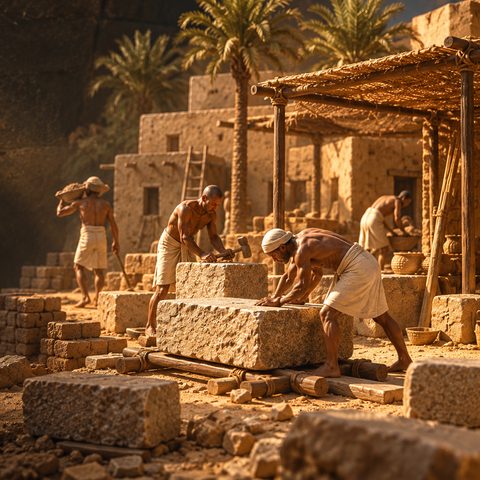
Labor and Settlement
The plan needs a huge share of Egypt’s working men on this one project at once, and far more people living on site than the excavated workers’ town at Giza could house.
How Many Workers Did It Take to Build the Great Pyramid? -
Exceeds historical record
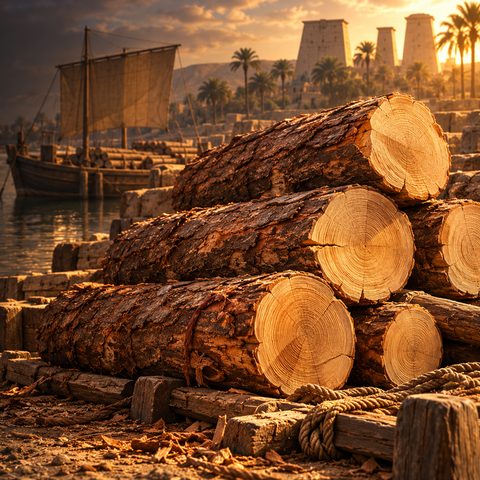
Timber Supply
Ramp planks, sledges and other timber wear out and have to be replaced. Across the build, the wood needed dwarfs the largest documented timber shipment.
How Much Timber Did the Great Pyramid Need? -
Exceeds historical record
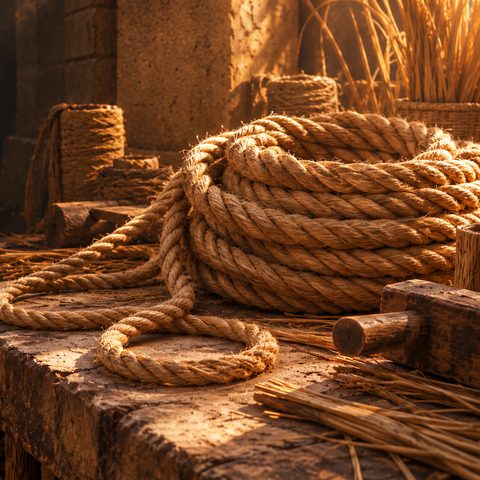
Rope Production
Hauling ropes wear out after about a week of hard use. Keeping the work moving means making new rope on an enormous scale, every year of the build.
How Much Rope Did the Great Pyramid Builders Need? -
Quantified burden
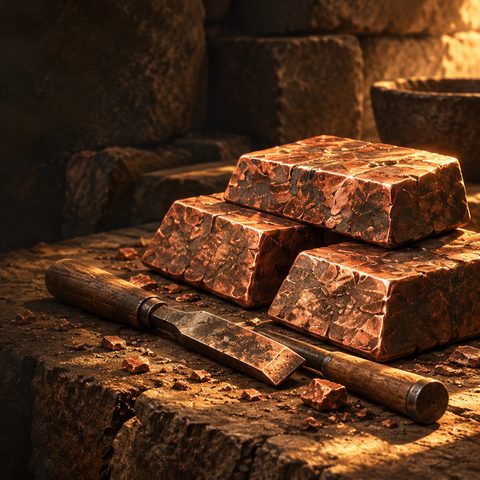
Copper Supply
Copper chisels lose metal with every blow, and recycling cannot win it back. The quarries need far more new copper each year than the biggest known Sinai mine produced.
How Much Copper Did the Great Pyramid Workers Need? -
Capability gap
Granite Transport
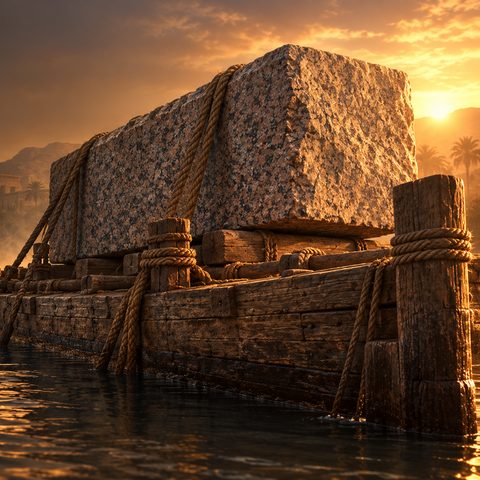
The heaviest granite beams weigh about 80 tonnes. Loading one onto a Nile barge pushes the deck down far past what the boat can safely take, and the explanation offers no working way to load or unload it.
Loading 80-Tonne Granite Beams onto a Barge -
Counted through feedback
Water Supply
Not a failure on its own, but a heavy load on everything else. The workers, the village and the worksite need water every day, and the people who carry it need water and food too.
How Much Water Did Great Pyramid Workers Need Each Day?
And the plan fails as a whole. Even set each of those aside, the jobs cannot all run at once, on the same schedule, from the same people and supplies.
So how was it built?
The audit proves that Old Kingdom Egypt could not have built the Great Pyramid as claimed.
The audit does not offer a different method in its place. It tests the explanation taught today against that explanation’s own evidence. A method that fails its own requirements does not become true because no replacement has been found yet. How the Great Pyramid was actually built is still an open question.
Who built the Great Pyramid?
The audit does not name the builder. It answers a narrower question: could Old Kingdom Egypt have done the work in the way the usual explanation describes? Who built it, and how, needs its own investigation.
When was it built?
The usual explanation places the build in the reign of the pharaoh Khufu, in Egypt’s Old Kingdom, over about twenty years. The audit takes that timing as part of the explanation it is testing. The date itself is not one of its findings.
What would change the answer
New evidence that clears every one of these limits, or a complete building plan that supplies every missing method and counts all of its people, materials and time against the same schedule. Until then, the usual explanation does not add up.
Read more
- Interactive explainers: each step of the build, worked through with pictures
- The white paper: the full technical audit
- The research paper: the argument, from first principles
- Frequently asked questions